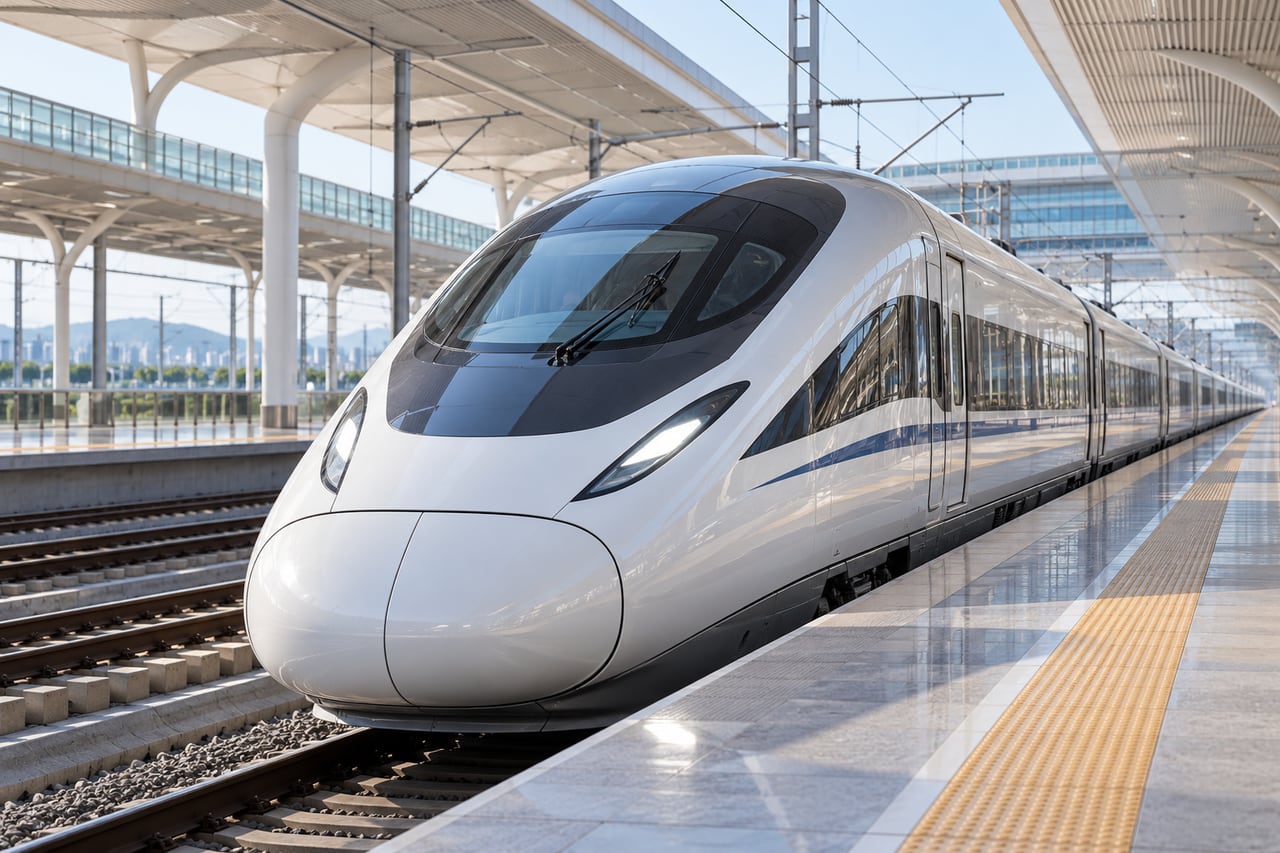
This tool adds up the real time for a train and a flight on the same leg, from the hotel door to the seat at the other end. It is for the evening you are looking at two tabs and wondering which morning will be less stressful.
What does the rail vs flight tool help you decide?
It helps you choose between a high-speed train and a domestic flight for one leg, such as Beijing to Shanghai or Kunming to Lijiang. It compares time only. The faster option is not always the better one, but you should know the gap before you decide.
How do you use it?
- Enter the train journey time in hours, taken from the timetable. Write 3.5 for three and a half hours.
- Enter the flight time in hours, from the airline schedule.
- Enter the time to reach the station and the airport at each end, both ends added together.
- Enter the waiting time at the station, which covers the security check and finding your platform.
- Enter the waiting time at the airport, which covers check-in, bag drop, security and boarding.
The tool starts with sensible defaults for transfers and waiting. Change them to match your group, your luggage and the cities involved.
How do you read the result?
You see two door-to-door totals, one for the train and one for the flight, and a plain sentence saying which is faster and by about how many hours. If the two are within half an hour, the tool calls it a tie. In that case, choose on comfort, luggage rules and price, not on the clock.
Station position matters. On the Beijing to Shanghai route, most trains use Beijing South, about 6 km from Tiananmen Square, and Shanghai Hongqiao, about 18 km west of central Shanghai[1]. Those transfers are part of your journey, so measure them from your actual hotel.
Where do you find the numbers?
- Train times: 12306 or a booking app. Our guide on reading train and flight times shows what to look for.
- Flight times: airline websites. Add the time it takes to reach the gate, not only the time in the air.
- Transfers: a map app and the metro or taxi route from your hotel. Allow extra for luggage.
- Waiting: expect X-ray bag checks at station entrances, and arrive 30 to 40 minutes before departure at major stations[2]. Foreigners must show a passport to buy a long-distance ticket and to pass the platform gates[3], so keep it handy.
What are its limits?
It ignores price, baggage fees, delays and the weather. A foggy morning can ground a flight, while a train timetable is usually steadier. It also cannot judge how a leg feels. Four hours in a roomy seat watching the countryside is not the same as an early-morning dash to the airport.
What should you do next?
Read our comparison of China rail and domestic flights, then see how to book your train tickets. If the leg sits inside a longer plan, check the whole route with the pace checker.