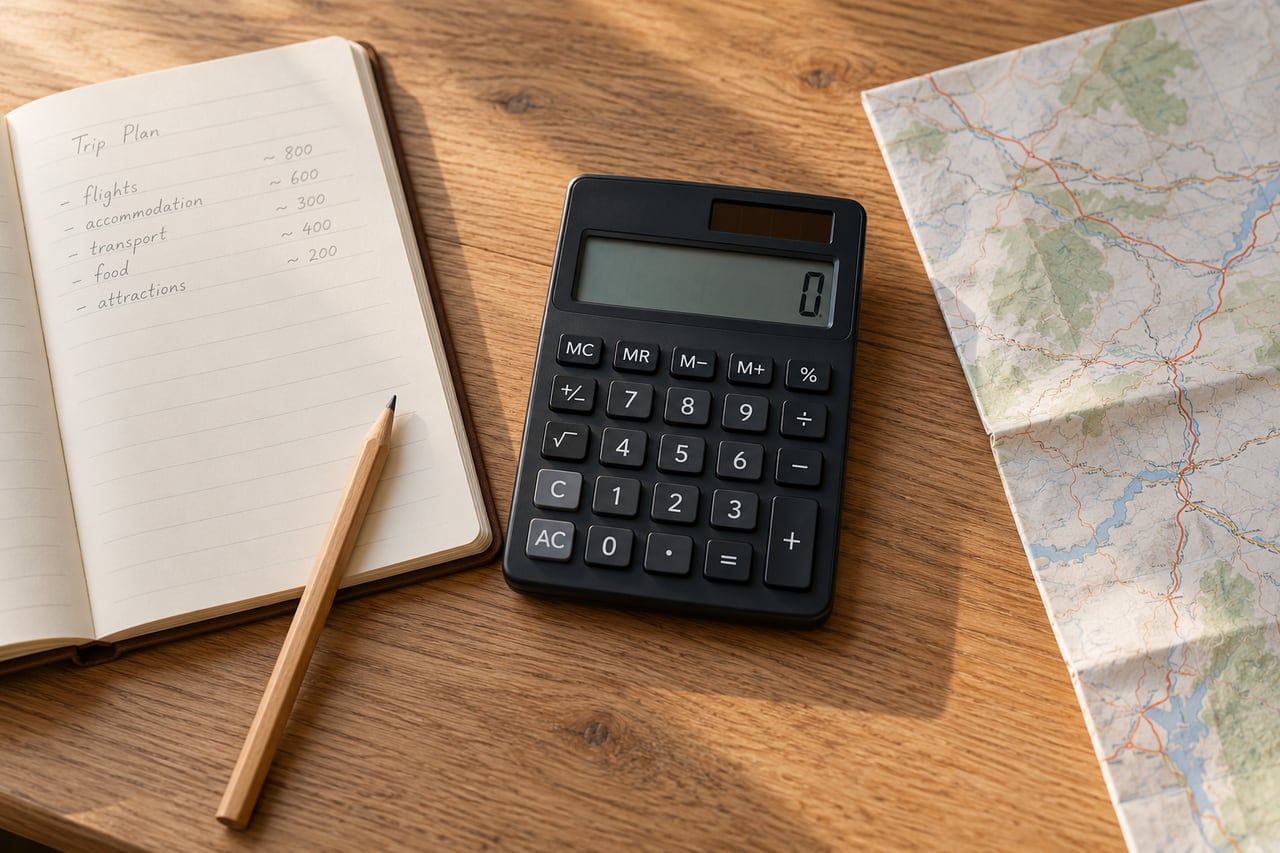
The planner adds up your whole trip in ringgit from the quotes you type in, and shows the total and the cost per person. It is for the moment when a friend asks “so how much is it?” and you want a number you can defend.
What does the budget planner help you decide?
It helps you decide whether a trip is affordable, and which line to trim if it is not. It handles six costs: return flights, hotel rooms, food, local transport and trains, entrance tickets, and travel insurance. A final line adds a buffer for extras.
How do you use it?
- Enter the number of travellers, the number of nights and the number of rooms.
- Enter the return flight price for one person.
- Enter the hotel price for one room for one night. If your rooms differ, use an average.
- Enter your food budget for one person for one day.
- Enter the total for local transport and trains for the whole group.
- Enter entrance tickets and travel insurance for one person each.
- Choose a buffer. A higher figure suits a group that shops or likes to change plans.
How do you read the result?
You get a trip total and a cost per person. The per-person figure is the one to compare with a package quote. Food is counted for one more day than the number of nights, because the arrival and departure days still need meals.
If the total feels too high, change one line at a time. Fewer nights, a shared room, or a different travel month usually moves the answer more than saving on snacks.
Where do you find the numbers?
- Flights: airline websites for your departure airport, checked for the month you plan to travel.
- Hotels: hotel booking sites, using a mid-range room in the area where you plan to stay.
- Food: our daily food budget guide explains how to set this.
- Trains and local transport: the 12306 site or a booking app for trains, and your itinerary for taxis and metro.
- Tickets: the official ticket page of each sight. A secondary source lists the Forbidden City at CNY 60 in peak season and CNY 40 off-peak[1], so always confirm on the official channel.
- Insurance: quotes from your insurer, read with our insurance guide.
Currency has its own cost. Secondary guides say foreign-card mobile payments carry a 3% fee on amounts above CNY 200[2]. That is unconfirmed, so keep a margin in the buffer. Tipping is not customary on the mainland[3], which removes one worry.
What are its limits?
The planner is only as accurate as your inputs. It does not include shopping, gifts, visas for people who need them, or the cost of getting to your departure airport. It also does not know that prices rise around public holidays, so check the public holiday calendar before you fix your dates.
What should you do next?
Read how to estimate a China trip budget in ringgit for the thinking behind each line. Then use the package comparator to set an agency quote beside your own total, and review what China packages usually leave out.